Leading Smls Pipe and fittings supplier from China since 1991

Comparing Seamless and Welded Steel Pipes: A Comprehensive Guide for Builders and Engineers
Comparing Seamless and Welded Steel Pipes: What You Need to Know Table of Contents 1. Introduction to Steel Pipes 2. Types of Steel Pipes 3. Understanding Seamless Steel Pipes 3.1 Manufacturing Process of Seamless Pipes 3.2 Advantages of Seamless Steel Pipes 3.3 Applications of Seamless Steel Pipes 4. Understanding Welded Steel
May 23,2026

Comparing Seamless and Welded Steel Pipes: What You Need to Know
Table of Contents
- 1. Introduction to Steel Pipes
- 2. Types of Steel Pipes
- 3. Understanding Seamless Steel Pipes
- 3.1 Manufacturing Process of Seamless Pipes
- 3.2 Advantages of Seamless Steel Pipes
- 3.3 Applications of Seamless Steel Pipes
- 4. Understanding Welded Steel Pipes
- 4.1 Manufacturing Process of Welded Pipes
- 4.2 Advantages of Welded Steel Pipes
- 4.3 Applications of Welded Steel Pipes
- 5. Key Differences Between Seamless and Welded Steel Pipes
- 6. Cost Considerations: Seamless vs. Welded
- 7. Performance Comparison of Seamless and Welded Steel Pipes
- 8. Conclusion
- 9. Frequently Asked Questions (FAQs)
1. Introduction to Steel Pipes
Steel pipes are integral components in numerous industries, including construction, manufacturing, and oil and gas. Their durability, strength, and versatility make them a preferred choice for transporting fluids and gases. However, selecting the right type of steel pipe is crucial for the success of any project. Among the various options available, seamless and welded steel pipes are two of the most widely used types. Understanding the differences between these two can help in making informed decisions for specific applications.
2. Types of Steel Pipes
Steel pipes come in various forms, each designed for specific applications and requirements. The two primary categories of steel pipes are **seamless** and **welded** pipes. Each type has unique characteristics, advantages, and disadvantages that can significantly impact their performance in different scenarios.
3. Understanding Seamless Steel Pipes
Seamless steel pipes, as the name suggests, do not have any seams or welds along their length. This feature gives them distinct advantages over welded pipes in certain applications.
3.1 Manufacturing Process of Seamless Pipes
The manufacturing process for seamless steel pipes involves several steps. Initially, a solid round steel billet is heated and then pierced to create a hollow tube. This tube is then elongated using a series of mechanical processes, such as rotary piercing and elongation, to achieve the desired diameter and wall thickness. The absence of seams during this process leads to a uniform structure, enhancing the mechanical properties of the pipe.
3.2 Advantages of Seamless Steel Pipes
Seamless steel pipes offer numerous benefits:
- **Higher Pressure Ratings**: Without seams, these pipes can withstand higher pressures and temperatures.
- **Improved Durability**: They exhibit greater resistance to cracking and other forms of mechanical failure.
- **Enhanced Flow Efficiency**: The smooth internal surface allows for better fluid flow, reducing turbulence.
- **Versatile Applications**: Ideal for high-stress applications such as oil and gas extraction, chemical processing, and power generation.
3.3 Applications of Seamless Steel Pipes
Seamless steel pipes find applications in various fields, including:
- **Oil and Gas**: Used for drilling and transporting oil and gas.
- **Power Generation**: Employed in steam generation and boiler applications.
- **Chemical Industry**: Suitable for transporting corrosive materials.
- **Structural Applications**: Used in construction for high-strength requirements.
4. Understanding Welded Steel Pipes
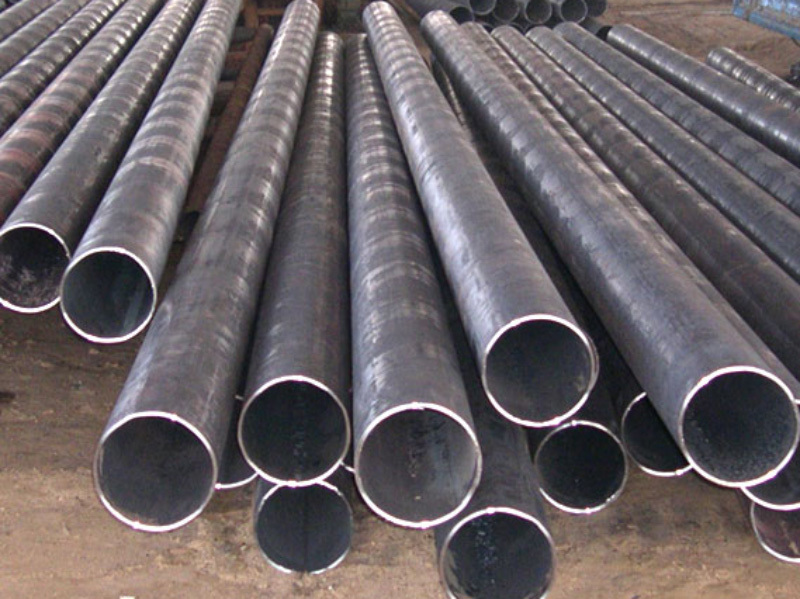
Welded steel pipes are created by joining two pieces of steel together through welding. This method forms a seam along the length of the pipe, which can influence its strength and performance.
4.1 Manufacturing Process of Welded Pipes
The manufacturing process of welded steel pipes begins with flat steel plates or coils that are heated and formed into a cylindrical shape. The edges are then welded together using various welding techniques, including electric resistance welding (ERW) or submerged arc welding (SAW). After welding, the pipes are typically subjected to inspection and testing to ensure quality and integrity.
4.2 Advantages of Welded Steel Pipes
Welded steel pipes offer several advantages:
- **Cost-Effectiveness**: Generally less expensive to produce than seamless pipes due to the simpler manufacturing process.
- **Versatile Sizes**: Can be produced in a wide range of diameters and wall thicknesses.
- **Availability**: More readily available in various sizes and lengths, making them suitable for a variety of projects.
- **Customizable**: Easier to customize for specific applications due to the flexibility in manufacturing.
4.3 Applications of Welded Steel Pipes
Welded steel pipes are commonly used in:
- **Construction**: Ideal for structural applications where high pressure is not a primary concern.
- **Water and Sewage Systems**: Used for transporting water and wastewater.
- **Industrial Applications**: Employed in various industrial settings for low to moderate pressure applications.
5. Key Differences Between Seamless and Welded Steel Pipes
When comparing seamless and welded steel pipes, several key differences become apparent:
- **Manufacturing Process**: Seamless pipes are made from a single piece of metal, while welded pipes are formed by welding together two pieces.
- **Strength and Durability**: Seamless pipes typically have higher strength and durability due to the absence of seams, making them suitable for high-pressure applications.
- **Cost**: Welded pipes tend to be more cost-effective due to their simpler manufacturing method.
- **Applications**: Seamless pipes are favored for high-stress environments, while welded pipes are suitable for less demanding applications.
6. Cost Considerations: Seamless vs. Welded
Cost is a significant factor when choosing between seamless and welded steel pipes. Seamless pipes are generally more expensive due to their complex manufacturing process and higher material costs. In contrast, welded pipes are more affordable, making them an attractive option for budget-conscious projects. However, it is essential to weigh the cost against the performance requirements of the specific application.
7. Performance Comparison of Seamless and Welded Steel Pipes
Performance can vary significantly between seamless and welded pipes. Seamless pipes excel in applications requiring high pressure and temperature resistance, while welded pipes are suitable for lower pressure applications. The presence of seams in welded pipes can create potential weak points, emphasizing the importance of considering performance characteristics during selection.
8. Conclusion
In conclusion, choosing between seamless and welded steel pipes depends on various factors, including application requirements, performance needs, and budget constraints. Seamless pipes offer superior strength and durability, making them ideal for high-pressure applications, while welded pipes provide a cost-effective solution for less demanding tasks. Weighing these factors will help you make an informed decision that aligns with your project's needs.
9. Frequently Asked Questions (FAQs)
1. What are the primary uses of seamless steel pipes?
Seamless steel pipes are primarily used in high-pressure applications such as oil and gas drilling, power generation, and chemical processing.
2. Are welded steel pipes less durable than seamless pipes?
Welded steel pipes can be less durable than seamless pipes due to the presence of seams, which may create weak points. However, they are still suitable for various applications.
3. How does the manufacturing process differ between seamless and welded pipes?
Seamless pipes are made from solid steel billets and do not have seams, while welded pipes are formed by welding two steel plates together.
4. Which type of pipe is more cost-effective?
Welded steel pipes tend to be more cost-effective due to their simpler manufacturing process, making them a popular choice for budget-sensitive projects.
5. Can seamless pipes be used for low-pressure applications?
While seamless pipes can be used for low-pressure applications, they are typically chosen for their strength in high-pressure scenarios. Welded pipes may be more appropriate for low-pressure needs.
Hot Tags:
Cangzhou KTD Steel Pipe Co.,ltd
Mengcun County, Cangzhou City, Hebei Province, China 061000


REQUEST QUOTE